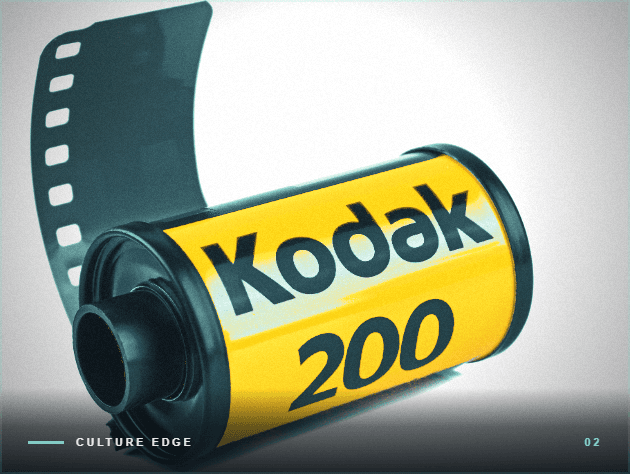
What Kodak's rise, collapse, and quiet rebirth reveal about the organizations that survive and the ones that only remember surviving
What Eastman actually built
George Eastman founded the Eastman Kodak Company in 1892 with a vision that was precise and genuinely radical for its time.
To make photography as convenient as the pencil.
That sentence is worth reading slowly. Eastman was not building a film company. He was not building a camera company. He was building access, the democratization of a capability that had previously belonged only to trained specialists with expensive equipment and darkroom expertise.
His invention of roll film and the Kodak box camera in 1888 put photography into the hands of ordinary people for the first time. The instruction that accompanied the camera, you press the button, we do the rest, was not a marketing line. It was a description of what the company existed to do: remove every barrier between a person and their ability to capture a moment worth keeping.
That purpose had nothing to do with film chemistry. Film was the mechanism. Memory was the purpose.
Throughout the twentieth century, Kodak built one of the most recognizable brands in the world on the strength of that purpose. It dominated film, cameras, photo finishing, and the broader ecosystem of consumer photography. At its peak it controlled more than two thirds of the United States film market and generated gross profit margins on film that reached upwards of 80 percent. The business was not just successful. It was extraordinarily, almost uniquely, profitable.
And that is precisely where the danger began.
Not in the moment of disruption. In the decade of success that preceded it. Because when a business model becomes that profitable, it stops feeling like a means to an end. It starts feeling like the end itself. The mechanism becomes the identity. And when the mechanism is eventually threatened, the organization defends the mechanism rather than returning to the purpose the mechanism was always meant to serve.
Film was the mechanism. Memory was the purpose. The day Kodak forgot that distinction, it began the slow drift toward a crisis it would spend decades not seeing.
The future that arrived inside the building
In 1975, a 26-year-old Kodak engineer named Steven Sasson built something in a Rochester laboratory that should have changed everything.
It was a prototype digital camera. It weighed eight pounds. It captured black-and-white images at a resolution of 0.01 megapixels. It stored photographs on a cassette tape and required 23 seconds to record a single image. By any modern standard, it was primitive.
By any forward-looking standard, it was an announcement.
Photography was beginning to separate from film. The image and its physical substrate were coming apart. Everything Kodak's business model depended upon, the film cartridge, the photo finishing, the chemical processing, the recurring revenue that made the business so extraordinarily profitable, was potentially made redundant by the device sitting on a workbench in its own laboratory.
Sasson presented the prototype to management. The response, documented in his later accounts, was not dismissal. It was understanding. Leadership recognized what the technology implied. They could see where it was pointing.
And then they made the decision that would take nearly four decades to fully reveal its consequences.
They calculated that digital photography would take significant time to reach consumer quality. They estimated the runway in years, perhaps decades. And they concluded that aggressive pursuit of digital technology would cannibalize the film margins that were generating the profits the company depended upon. The rational response, in that room, in that year, given those margins and that timeline, was to continue optimizing the film business while monitoring digital development carefully.
It was a decision that made complete sense within the logic of the existing business model.
It was a decision that gradually disconnected the organization from its own founding purpose.
The future arrived inside Kodak in 1975. Leadership understood what it meant. The decision that followed was not ignorance. It was the choice of today's margins over tomorrow's relevance.
How alignment erodes without anyone deciding to erode it
What followed was not a single catastrophic decision. It was a gradual accumulation of choices, each defensible in isolation, that together moved the organization further from the purpose that had made it great.
Kodak invested billions in digital technology over the subsequent decades. It developed digital cameras, imaging software, online photo services, and a substantial patent portfolio in digital imaging. The organization was not blind to the future. It was, in many respects, building it. By the late 1990s, Kodak had launched one of the first consumer digital cameras and one of the first online photo sharing platforms.
But the resources, the incentive structures, the measurement systems, and the cultural rewards of the organization continued to flow toward film. Strategic communication pointed toward the future. Operational reality remained anchored to the past. The gap between what the organization said it was doing and where its actual capacity was being deployed grew slowly and largely invisibly, because the film business remained profitable enough, for long enough, to make the gap feel manageable.
Meanwhile, competitors without film margins to protect moved faster. Sony and Canon shifted aggressively to digital imaging. Technology companies redefined what a photograph meant. The internet changed how memories were stored and shared. Mobile devices began making dedicated cameras optional. And then, in the late 2000s, the smartphone arrived and made them nearly obsolete for the majority of consumers.
The pace of change that had seemed manageable became sudden. Digital sensors became commodities. The demand for consumer film collapsed. The runway that leadership had estimated in decades in 1975 had been running for thirty years, but the final approach came faster than any internal model had prepared for.
In 2012, Eastman Kodak filed for Chapter 11 bankruptcy protection. The company sold the digital imaging patents it had spent decades developing. It eliminated billions in liabilities. It emerged from bankruptcy smaller, restructured, and radically transformed.
Kodak had invented much of the technology that would eventually disrupt it. For thirty years after the Sasson prototype, it had known what was coming and had been unable to follow where its own innovation was pointing.
The question that was never squarely answered
Looking back on Kodak's trajectory, one question becomes the lens through which the entire story reorients itself.
What business was Kodak actually in?
Film? Cameras? Photo finishing? Chemical processing? All of those answers describe mechanisms. None of them describe purpose. Eastman's original answer, making memory accessible to ordinary people, was a purpose. It described an enduring human need that technology would continue to serve regardless of the physical medium through which it was served.
Had that purpose remained the governing frame for strategic decisions, the question in 1975 would not have been whether digital photography threatened film margins. It would have been whether digital photography served the human need for accessible memory more effectively than film. The answer to that question pointed clearly toward digital. Pursued from a position of purpose rather than product protection, Kodak's extraordinary capability in imaging science, chemical synthesis, and precision coating could have been the foundation of digital leadership rather than the legacy it was protecting.
Instead, the organization defined itself by its mechanism. And when the mechanism became obsolete, the identity built around it struggled to find its footing.
This is what happens when the gap between stated purpose and operational reality grows too wide for too long. The organization continues communicating a purpose that its decisions no longer serve. Institutional knowledge, deep and genuine, remains locked inside the people and the systems that developed it, unable to migrate to the new context because the communication that should carry it forward has not been built. And the capability that made the organization great, in Kodak's case one of the most sophisticated chemical coating and imaging science operations in the world, waits, underutilized, for the connection between what the organization knows and what it is trying to do to be restored.
Products evolve. Technologies change. Markets shift. The underlying human need often remains. Organizations that define themselves by their product lose their footing when the product changes. Organizations that define themselves by purpose have somewhere to stand.
What survived the bankruptcy
Here is what the Kodak story omits.
Kodak did not disappear.
The company that emerged from bankruptcy in 2013 was smaller and radically different from the one that filed. But it was still built on something real: a century of accumulated expertise in precision coating, chemical synthesis, and advanced materials science that had been the foundation of its film business but was never limited to it.
In the years since, Kodak has quietly redirected that capability toward entirely new markets. Its advanced materials division now manufactures coating layers for electric vehicle batteries and energy storage devices, applying the same precision industrial processes that once coated film to the materials science demands of clean energy. Its pharmaceutical division, operating out of an FDA-registered facility in Rochester, produces regulated reagents for laboratories and biopharma developers. Its commercial print division leads in sustainable packaging solutions through high-speed industrial inkjet platforms.
And in a detail that feels almost like a deliberate closing of a circle, Kodak maintains a near-monopoly on 35mm analog motion picture film, sustained by prominent Hollywood directors who have made the preservation of film photography a matter of artistic principle.
The founding capability never disappeared. The precision of the chemistry, the sophistication of the coating processes, the depth of the materials science, all of it survived. What took decades to rebuild was the connection between that capability and a purpose clear enough to deploy it toward a future the organization could own.
Eastman's original vision, making something accessible that was once only available to specialists, turns out to describe multiple industries. It described consumer photography in 1892. It describes the industrial applications of advanced coating science in 2025. The purpose was always larger than the product. It took a bankruptcy to make that visible.
The practice Kodak never built
The Kodak story is not ultimately about technology. It is not about missing a market shift or failing to invest in the right direction. Kodak saw the shift, understood the technology, and invested in both.
It is about the absence of a deliberate organizational practice: the regular, honest return to the question of whether what the organization is doing still serves the reason the organization exists.
Most organizations are skilled at running the cycle of success. They compete, they win, they refine the business that winning built. The discipline that is much harder to sustain is the discipline of asking, at the height of success, whether the cycle itself needs to change. Whether the strategy that produced the last result is still the right strategy for the next one. Whether the conditions have shifted enough that continuing on the same terms is no longer the path to staying relevant.
Kodak never built that discipline. Not because its leaders lacked intelligence or commitment. Because the film margins made the question feel unnecessary. When a business is generating returns of 80 percent, the invitation to interrogate whether the business still serves the organization's founding purpose is easy to decline. The success becomes the answer. The momentum becomes the plan. And the gap between what the organization says it stands for and what its decisions actually serve grows slowly, invisibly, in the background.
The Sasson prototype in 1975 was Kodak's clearest invitation to ask that question. The technology on the workbench was pointing toward a future the current strategy was not designed to reach. An organization with a genuine practice of returning to its founding purpose, honestly and regularly, would have recognized that moment for what it was: not a threat to the business model, but a direction pointed back toward Eastman's original vision.
That habit, deliberately built and consistently maintained, is what vision, mission, core values, and beliefs are actually for. Not as statements displayed on walls or cited in annual reports. As the active criteria against which strategic decisions are evaluated. The questions asked when a new technology appears, when a market shifts, when a competitor moves unexpectedly, when an engineer presents a prototype in a Rochester laboratory and the room must decide what to do with it.
At Kodak, the honest answer to that question in 1975 would have been uncomfortable. It would have required leadership to acknowledge that the technology on the workbench in front of them was pointing toward a future their current strategy was not designed to reach. That acknowledgment would have demanded change. And the film margins that made change feel unnecessary were, at that moment, the most dangerous thing in the room.
Success is not the enemy of renewal. The belief that success makes renewal unnecessary is. The organizations that remain relevant are the ones that build the discipline of honest examination before the environment builds it for them.
The standard that survives the product
George Eastman's vision was never about chemistry. It was about access. The ability of ordinary people to preserve the moments that mattered to them, without specialized knowledge, without expensive equipment, without the barriers that had previously made photography a specialist activity.
That vision survived the company's bankruptcy. It survived because it described a human need that does not change with the medium through which it is served. The medium changed from film to digital to mobile to whatever comes next. The need remained.
Organizations that define themselves by their product will eventually find their product obsolete. Organizations that define themselves by the enduring human need their product serves have somewhere to stand when the product changes. Not guaranteed success. A genuine foundation for adaptation.
Kodak is still here. Smaller than it was, different in almost every operational dimension from the company that dominated the twentieth century, and operating in markets its founders could not have imagined. But it is building on something real: a depth of technical capability that was always larger than the film business it was expressed through.
The century of accumulated expertise in precision chemistry and advanced materials science, which gave Kodak its advantage in film, is now giving it a position in EV batteries, pharmaceutical manufacturing, and industrial printing. The capability that survived the bankruptcy is finding its purpose again.
That is the work every organization must do. Not once. Continuously. Not waiting for the bankruptcy to force the question. Asking it now, while the margins are still healthy and the business model still works, before the pace of change makes honest examination feel like a luxury that cannot be afforded.
Because the time to ask what business you are truly in is not when the answer has become urgent.
It is when the answer still has room to change everything.
What Working As 1 takes from this
Working As 1 builds organizational performance on four foundations: Vision, Mission, Core Values, and Beliefs. The Kodak story is a precise illustration of what happens when the distance between those foundations and the organization's daily decisions grows too wide, for too long, without anyone examining the gap.
Eastman's founding vision, to make photography as convenient as the pencil, was not aspirational language. It was a working answer to a working question: what enduring human need does this organization exist to serve? A vision that answers that question precisely gives every person in the organization a reference point for decisions. The Sasson prototype in 1975 should have been evaluated against that reference point. A leadership team asking whether the technology on the workbench served the human need for accessible memory would have arrived at a different answer than a leadership team asking whether it threatened film margins. Same technology. Different question. Different future.
Kodak's mission, had it been written to describe the work rather than the product, would have named something like: to give ordinary people access to tools that preserve the moments that matter to them. That mission would have survived the transition from film to digital to mobile, because it describes the work, not the mechanism. A mission that names the mechanism rather than the work becomes obsolete when the mechanism does.
The core values that Kodak needed, and that its eventual decline suggests were either absent or unenforced, were the ones that govern how an organization examines itself honestly when success makes honest examination uncomfortable. The willingness to surface difficult truths. The accountability to ask whether the strategy is still serving the purpose. The healthy conflict that pushes back against the comfort of 80 percent margins when the question on the table is whether those margins are preserving the future or consuming it.
And the beliefs, the promises Kodak made to its stakeholders, ultimately rested on a brand promise that was larger than film. Millions of people trusted Kodak with their most important memories. That trust was not a trust in a chemical process. It was a trust in the organization's commitment to serving a human need reliably and accessibly. The brand promise that earned that trust was capable of surviving the transition to digital. The organizational alignment required to honor it in a new medium was not built in time.
The gap between what the organization said it stood for and what its decisions actually served is the gap Working As 1 exists to close. Not after the bankruptcy forces the question. Before the margins make the question feel unnecessary.
Kodak is rebuilding. It is finding purpose again in markets its founders could not have imagined, using capabilities that were always larger than the product they were first expressed through. The Vision was always there. The work now is building the organizational infrastructure to ensure it governs decisions in real time, not only in retrospect.
Vision without organizational infrastructure is inspiration waiting for a crisis to make it necessary. The crisis at Kodak was four decades in the making. The examination that might have prevented it was always available. It simply was not required — until it was.
References
Steven Sasson, Kodak engineer, documented accounts of the 1975 prototype presentation, widely reported including New York Times 2008. Eastman Kodak Company, SEC filings and bankruptcy proceedings, 2012. Harvard Business Review, Kodak case studies. Kodak corporate history and annual reports. Kodak post-bankruptcy operations: advanced materials, pharmaceutical, and print divisions, company documentation 2013-2025. United States Bankruptcy Court, Western District of New York, Kodak reorganization plan 2012-2013.