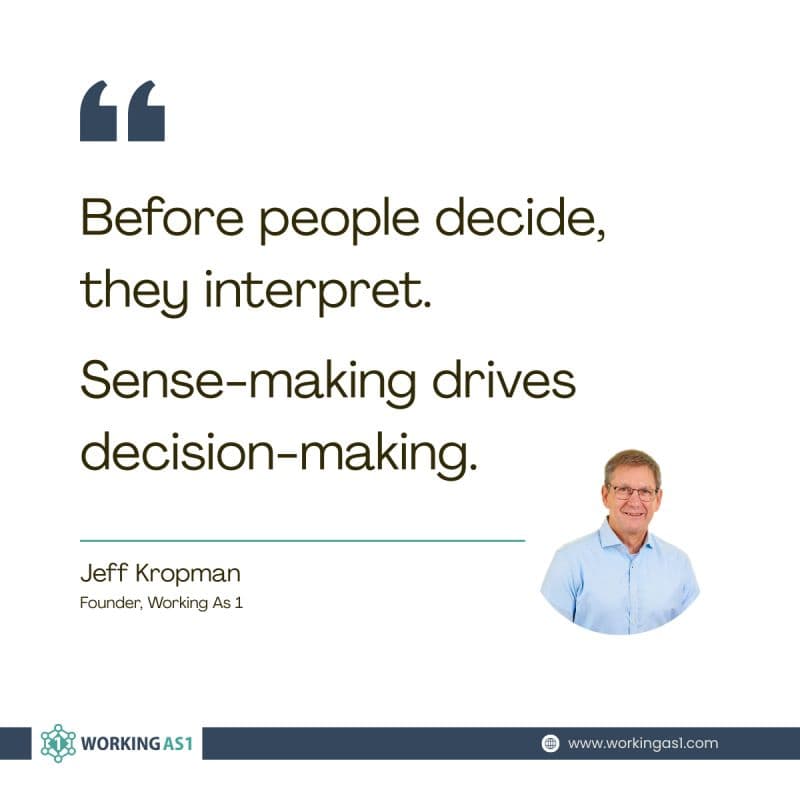
Before decisions are made, something quieter happens first.
People interpret what they see and hear. They compare it to past experience, current priorities, and what they believe others expect. Only then do they decide how to act.
When sense-making differs across a team, decisions naturally diverge.
Looking more closely often reveals subtle influences:
- The same information may be understood in different ways
- Context and assumptions shape how signals are interpreted
- Unspoken expectations influence individual judgment
- Narratives about “what is really happening” form quickly
Improving shared understanding often improves decisions — not by forcing agreement, but by strengthening the foundation from which choices are made.
sense-makingdecision making